Remote Telescope Rental: The Complete Guide (2026)
Remote telescope rental lets you access professional-grade astronomical observatories from your browser — no telescope, no dark sky, no equipment setup required. In 2026, it's the fastest-growing segment of astrophotography, and for good reason.
This guide covers everything you need to know: how remote telescope services work, what they cost, what data you receive, and how to get your first stunning deep-sky image.
What Is Remote Telescope Rental?
A remote telescope rental service gives you scheduled access to a real, physical telescope located at a professional dark-sky observatory. The telescope is operated automatically based on your booking: you select a celestial target, specify imaging parameters, and the system captures your data during your reserved window.
The raw astronomical data (FITS files) is then delivered to your account. You download and process the images yourself, or purchase a pre-processed JPEG alongside the raw data.
No telescope. No travel. No fighting with polar alignment at 2 AM. Just data.
What Equipment Do These Services Use?
Professional remote telescope services use instruments most amateur astronomers never get access to:
Aperture: Typically 80–400mm refractors and 8"–20" Ritchey-Chrétiens — capturing far more light than consumer telescopes
Cameras: Cooled monochrome CMOS sensors like the ZWO ASI2600MM (61 megapixels, −20°C cooling) producing 16-bit scientific data with negligible thermal noise
Filters: Narrowband Ha/OIII/SII (3–5 nm bandpass) and LRGB filter sets for true-color imaging
Mounts: Precision German Equatorial Mounts with active guiding — sub-arcsecond tracking across a full night
Locations: Our observatory at Starfront, Texas: a Bortle 1 dark sky site
This is equipment that costs $30,000–$150,000 to replicate at home. Remote rental provides access starting at $79 per session.
What Data Do You Receive?
A typical remote telescope booking delivers:
FITS sub-frames: Individual 300–600 second exposures in 16-bit format — the scientific raw data straight from the sensor
Calibration masters: Pre-made dark, flat, and bias frames matched to your session — essential for removing noise and optical artifacts
Session report: Acquisition log with timestamps, filters used, seeing conditions, and sky transparency
Preview JPEG: A processed preview (optional add-on) for quick sharing
You can also purchase pre-captured astrophotography datasets — professionally stacked and calibrated, ready for final processing, with no booking required.
How Much Does Remote Telescope Rental Cost?
Pricing varies by service and instrument. Here's a realistic breakdown for 2026:
Entry-level sessions: $50–$80 per night (1–2 hour imaging window, quality refractor)
Mid-range sessions: $80–$200 per night (full-night access, premium instrument)
Premium sessions: $200–$500 per night (large aperture, narrowband capable, prime site)
SkyShare Astro offers full-night sessions on a confirmed Bortle 1 dark sky site in the Texas desert, imaging with a SkyWatcher Esprit 100 Triplet (1100mm f/5.5 apochromatic refractor) paired with a ZWO ASI2600MM monochrome camera. Sessions start at $79 for your first night (Discovery offer), then $99/night standard — with student pricing at $69/night and a premium New Moon rate of $129/night for optimal darkness conditions. Multi-night packages are also available, bringing the per-night cost down to $74.95.
Ready to capture the universe?
Professional telescope access from $79/night. Our team handles everything — you process the data.
Book Your Night — From $79Want to rent a telescope online · Read our remote telescope rental guide · Browse astrophotography datasets
Compare that to $15,000–$30,000 you'd spend assembling equivalent personal equipment — plus travel to dark sky sites, plus years of learning to operate it. The economics strongly favor renting.
What Can You Image?
Remote telescopes at dark-sky sites can image virtually any deep-sky object visible from their hemisphere:
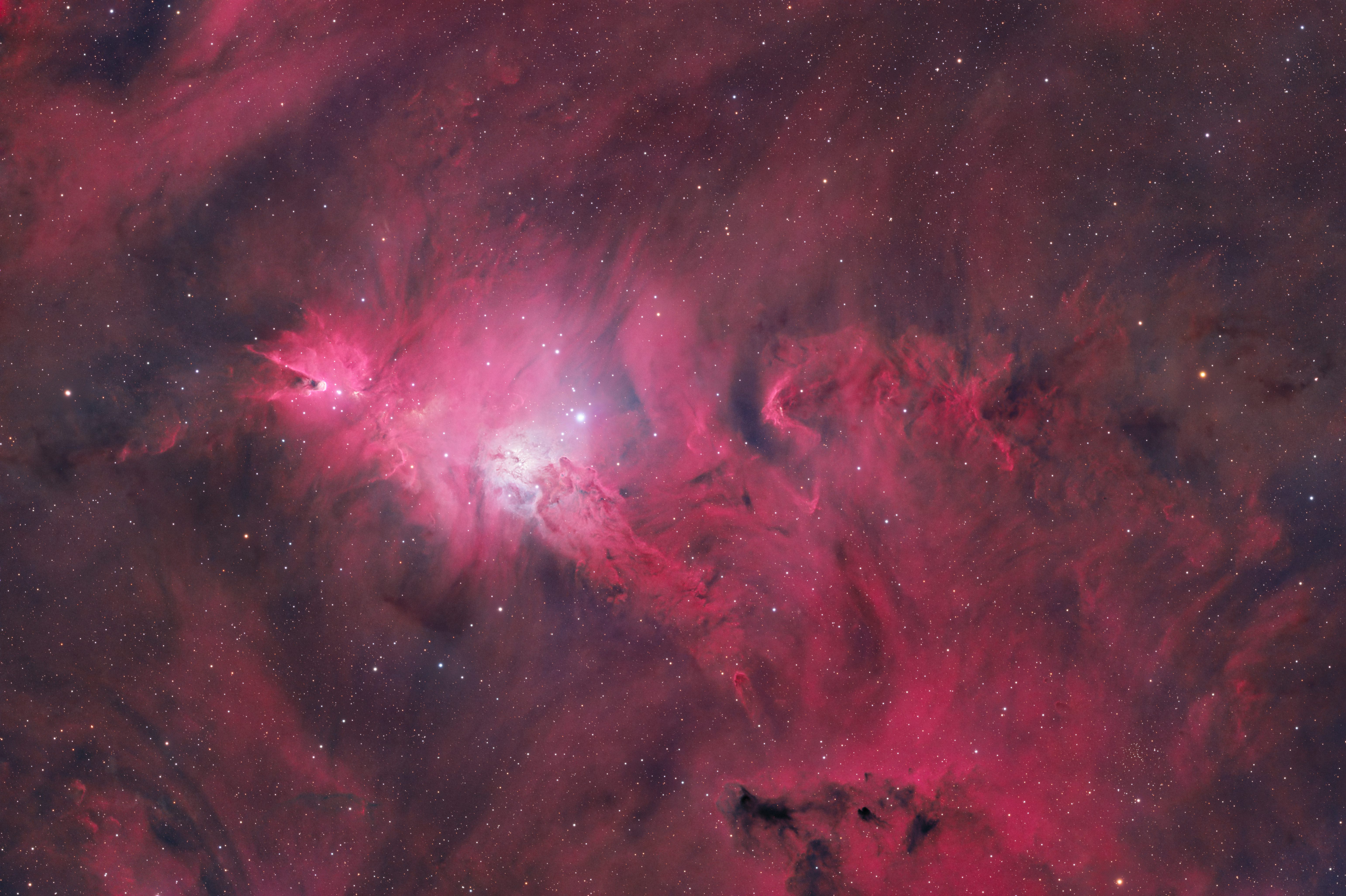
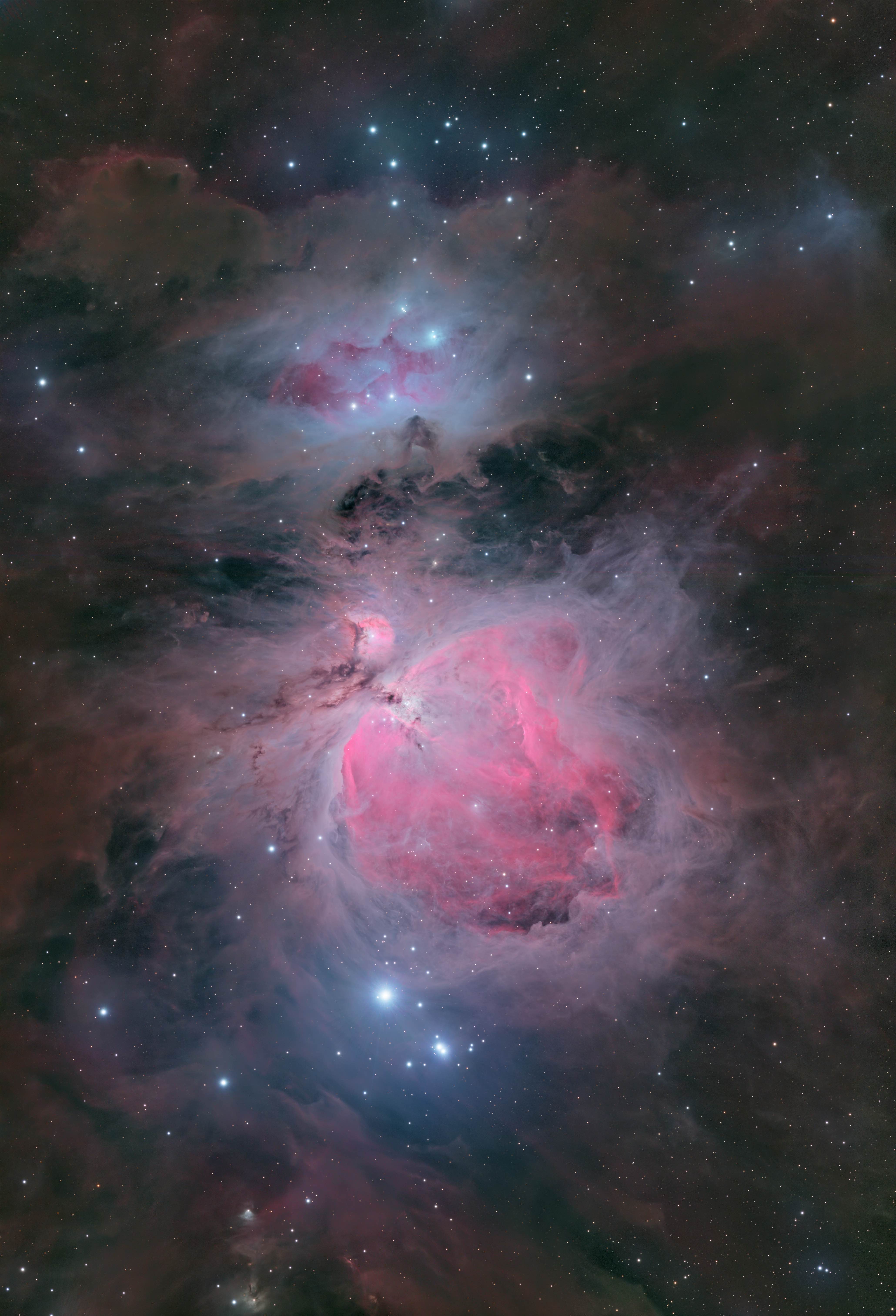
Emission nebulae: Orion (M42), Eagle (M16), Lagoon (M8), Heart (IC 1805) — especially stunning in narrowband
Galaxies: Andromeda (M31), Whirlpool (M51) — with detail invisible from light-polluted skies
Supernova remnants: Crab Nebula (M1), Cygnus Loop — requiring long integration times only achievable at dark sites
Planetary nebulae: Ring Nebula (M57), Dumbbell (M27) — compact but rich in emission
Star clusters: Pleiades (M45), Hercules globular (M13) — beautiful broadband targets
Browse our astrophotography gallery to see real images captured with our telescope. All data is available for purchase and your own processing.
Who Is Remote Telescope Rental For?
Total beginners: Skip years of equipment learning. Get real astronomical data immediately and focus on processing — where the creative work happens.
Urban imagers: If you live in a light-polluted city, remote access is the only practical way to do narrowband deep-sky imaging.
Experienced astrophotographers: Access instruments you don't own, image targets not visible from your latitude, or capture data for scientific projects.
Educators and students: Live telescope access for classrooms — book a session and observe in real time from anywhere.
Processing Your Data
Once you have your FITS files, the processing pipeline is straightforward:
Calibration — apply dark, flat, and bias masters to remove sensor artifacts
Registration — align all sub-frames so stars overlap precisely
Integration — sigma-clipped stack to dramatically reduce random noise
Stretching — bring faint signal into the visible range with a non-linear stretch
Post-processing — color balance, noise reduction, sharpening, final adjustments
Free tools like Siril handle the entire pipeline from calibration to final image. PixInsight is the professional standard for advanced users.
How to Book Your First Session
Browse available targets in the gallery or visit the booking page
Select your date and imaging window
Specify your target and filter preferences
Complete payment — first night from $79
Receive your JPEG and FITS data in your dashboard after the session
Sessions are weather-guaranteed — if conditions prevent imaging, your session is automatically rescheduled or refunded.
Remote telescope rental removes every technical barrier between you and the universe. The data is out there. Book your first session tonight.
Ready to capture the universe?
Professional telescope access from $79/night. Our team handles everything — you process the data.
Book Your Night — From $79Want to rent a telescope online · Read our remote telescope rental guide · Browse astrophotography datasets