Astronomy Equipment for Renters: Why Buying a Telescope Is the Wrong First Move
You've been told the dream: own your gear, own your night sky. But for most amateur astrophotographers, that $8,000 telescope sitting in the garage sees more ceiling than stars. Owning astronomy equipment doesn't mean using it — and it certainly doesn't mean seeing what you actually came here to see.
This article is for the person who wants stunning deep-sky images, not a storage problem. If you're weighing rent vs. buy, here's the honest case no gear manufacturer will ever make for you.
The Real Cost of Owning Astronomy Equipment Nobody Talks About
The sticker price is only the beginning. A capable deep-sky imaging rig — mount, refractor, camera, filters, focuser, guide scope — runs $5,000 to $12,000 before you've bought a single cable. Then comes the learning curve: polar alignment, collimation, plate solving, guiding calibration. Most beginners spend their first six months troubleshooting, not imaging.
And then there's the sky itself. If you live anywhere near a city — Bortle 5, 6, 7, 8 — your equipment is physically limited by the light pollution washing out every faint nebula you're trying to capture. The gear isn't the bottleneck. The sky is. No amount of money spent on optics fixes that.
The average urban astrophotographer gets roughly 10 to 15 usable imaging nights per year, factoring in clouds, moon phases, and life getting in the way. Spread a $10,000 investment across those nights and you're paying hundreds of dollars per session before you've touched a processing app.
Renting astronomy equipment flips this math entirely. You pay for the nights you actually use, under skies you could never access from your backyard, with gear already calibrated and ready to deliver data.
What "Renting" Actually Means in Modern Astrophotography
Remote telescope rental has matured significantly. This isn't borrowing a department store refractor from a library. Modern platforms give you access to professional-grade instruments under certified dark skies — the kind of access that was reserved for university observatories a decade ago.
Here's what a genuine rental session looks like with SkyShare Astro:
- You pick your target — a nebula, a galaxy cluster, whatever you're chasing
- The telescope operates under Bortle 1 skies in West Texas, where the Milky Way casts shadows and the limiting magnitude goes places your backyard never will
- Your raw FITS files are delivered by morning, ready to process in PixInsight, Siril, or whatever workflow you use
- If weather interferes, you're credited — no friction, no debate
The telescope doing this work is the same instrument that actively tracks asteroids for Geneva Observatory. That's not a marketing line; it's the actual instrument, scientifically active, available for your sessions.
You don't configure anything. You don't troubleshoot a mount at 2 a.m. You choose a target and receive data. That's the product.
For someone who wants images — not a hobby in equipment maintenance — this is the more rational path.
Rent vs. Buy: An Honest Framework for Making the Decision
Neither option is universally right. Here's how to think through it clearly.
Rent first if:
- You're within your first two years of astrophotography and still learning what targets excite you
- You live under Bortle 5 or worse skies with no realistic access to dark sites
- You want to test a specific imaging setup before committing thousands of dollars
- You image fewer than 20 nights per year — the economics simply don't favor ownership at that frequency
- You want results now, not after a six-month setup learning curve
Buy if:
- You image consistently, 40+ nights per year, from a dark or semi-dark site
- You have a permanent or semi-permanent setup that eliminates the setup/teardown overhead
- You want full creative control over every variable in the imaging chain
- You've already rented, know exactly what equipment suits your targets, and have the sky to support it
Ready to capture the universe?
Professional telescope access from $79/night. Our team handles everything — you process the data.
Book Your Night — From $79Want to rent a telescope online · Read our remote telescope rental guide · Browse astrophotography datasets
The honest answer for most people reading this: rent first, buy later if the data tells you to. The astrophotographers who regret their gear purchases almost always bought too early, before they knew what they actually needed. The ones who rented first bought with clarity.
One underrated benefit of renting: you get to image targets that are simply out of reach from your location. The Eta Carinae Nebula, the Rho Ophiuchi cloud complex, objects that sit too low on your horizon or drown in your light dome — under Bortle 1 skies in West Texas, those targets are accessible. Owning a telescope in Chicago doesn't change that.
The One Question That Settles the Rent vs. Buy Debate
Ask yourself this: Do I want to do astrophotography, or do I want to own astrophotography equipment?
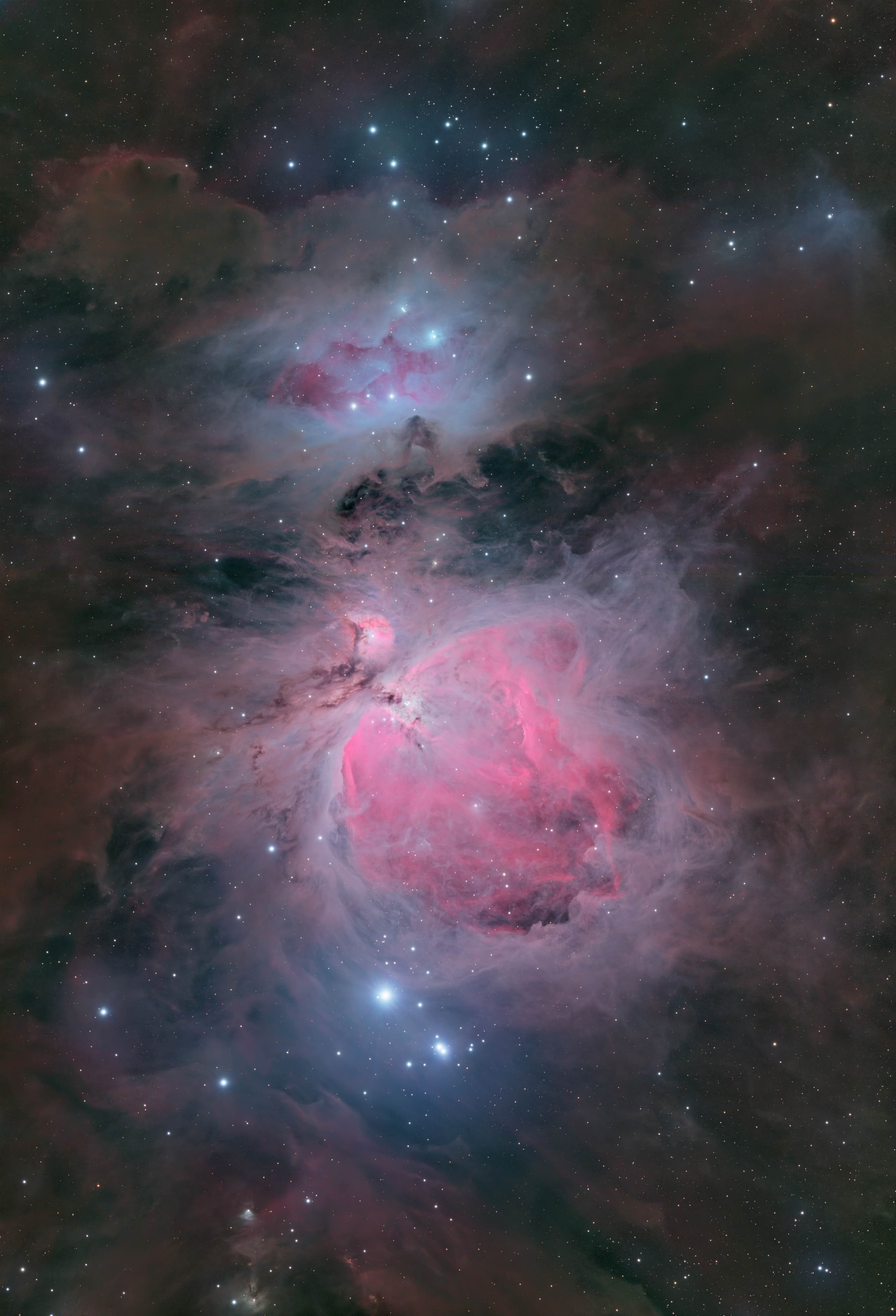
They're not the same thing, and the hobby has a long tradition of conflating them. Gear acquisition is its own satisfying loop — researching mounts, comparing sensors, reading forum threads at midnight. There's nothing wrong with enjoying that. But if what you actually want is images of the Orion Nebula in full resolution, or a processed shot of the Andromeda Galaxy that you printed and hung on your wall, then the equipment is a means, not the end.
Renting astronomy equipment removes the means from the equation and delivers the end directly. You get FITS data from a dark-sky observatory, taken with a calibrated professional rig, without storing anything in your garage or spending a weekend on polar alignment.
For the frustrated urban astrophotographer — the one who bought a decent setup, pointed it at Orion from a Bortle 7 suburb, and wondered why the images looked nothing like what they'd seen online — this is the clearest path forward. The problem was never your skill or your camera. It was the sky.
Stop Waiting for Perfect Conditions You'll Never Have
The best astronomy equipment for renters isn't a specific telescope model or camera sensor. It's access — to dark skies, to calibrated gear, to nights that actually deliver data worth processing.
If you're still on the fence between buying and renting, the lowest-risk move is obvious: try a single session first. See what Bortle 1 data looks like in your processing software. See what your target actually looks like when the sky isn't fighting you.
View sessions and pricing at SkyShare Astro →
FAQ
Is remote telescope rental suitable for beginners? Yes — it's arguably better suited to beginners than ownership. You receive calibrated FITS data without needing to configure or troubleshoot any equipment. The learning curve shifts from hardware setup to image processing, which is where the creative work actually happens.
What do I need to process the FITS files I receive? Free and paid options both work well. Siril is free and capable. PixInsight is the industry standard for serious processing. Both have active communities and tutorials specifically for deep-sky data.
What if the weather is bad on my session night? SkyShare Astro offers a weather guarantee — if conditions prevent your session from running, you receive a credit. No paperwork, no argument.
How does Bortle 1 compare to typical backyard skies? Most urban and suburban observers are under Bortle 5–8 skies, where light pollution washes out faint nebulosity and limits dynamic range. Bortle 1 is the darkest classification on the scale — the sky where the Milky Way is bright enough to cast a visible shadow. The difference in data quality is not subtle.
Can I request specific targets or imaging parameters? Yes. You select your target when booking. For specific filter or exposure preferences, check the options available at SkyShare Astro pricing.
Ready to capture the universe?
Professional telescope access from $79/night. Our team handles everything — you process the data.
Book Your Night — From $79Want to rent a telescope online · Read our remote telescope rental guide · Browse astrophotography datasets